
See part 1 of this article here: Parenting & Divorce: Meeting the Needs of Our Children Part 1
Role of Parents During Divorce
At the end of this blog post is a tool entitled, The Parent’s Promise and no matter what stage of divorce you are in, some or all of these items will apply to you. This document was written by children of divorce for children of divorce. Please ensure that you are adhering to these promises should you move forward towards the divorce decision. Prior to, during, and after your divorce, when interacting with your children always ask yourself, “Is this behavior helping or hurting my child?”
Your role as a parent is to put your children first. No matter whose choice the divorce was or whose fault it was, one thing is for sure — it was not the choice of the children. We must look out for their best interests during this time.
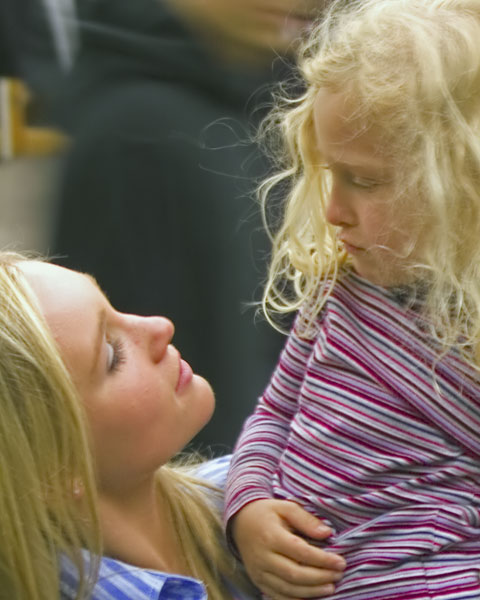
Communication
Communication is another responsibility of the parent. Depending upon the stage of divorce that you are in, it is very important for you to communicate with your children about this event. In the initial communication to the children, it is optimal if both parents can communicate about the divorce together; however this may not always be possible.
Children are very perceptive and it is best for you to be open and honest with them. It is very important that your children know you are not leaving them and that both of you still love them very much. For further information on communicating with your children about your divorce, please refer to the book, Good Parenting Through Your Divorce by Mary Ellen Hannibal (2002).
The Parent’s Promise
Written by Children of Divorce for Children of Divorce
For the greatest good of my child ______I hereby agree that:
- I will not speak negatively about my child’s other parent to my child.
- I will not say to my child “that (insert negative behavior or characteristic) is just like your father/mother”.
- I agree to not put my child in the middle of issues with their other parent (esp. child support).
- I agree to not use my child as a pawn to get back at their other parent.
- I agree that if my child’s parent has a new relationship that I will not speak negatively of this other person to my child.
- I will not expect my child to support my emotional health.
- I will periodically ask my child how they are doing.
- I will do my best to fully support my child during this process.
- I will allow my child to be a child during this time.
- I will seek outside professional counseling if I need to speak with someone about this situation or if I am having difficulty maintaining this agreement.
- I agree that if I do not uphold the above promises that I personally am not acting in the best interest of my child’s physical and emotional health.
- I will speak with my child’s coach/counselor once a month to gain further insight.
By agreeing to the Parent’s Promise I am accepting responsibility as a parent to provide the best environment possible during this transition for my child. In upholding these promises, I am also acknowledging to my child that they have no fault in this decision that was made by their parents. I am fully committed to the best interest of my child’s emotional and physical health during this time and to their future growth and development.
Honestly and with much love, I commit to this for my child. (Signed, __________)
Copyright Shannon Rios 2002. Reprinted by permission only.
Shannon R. Rios Paulsen MS LMFT (www.inlovewithme.com) has spent the last 12 years learning, writing, and coaching about self-love. She is a professional life coach and a licensed marriage and family therapist. She is the author of two best-selling guided meditations: The Healing Journey Within: Meditations for Abundance and Love, Volume I (Deserving) and Volume II (Manifesting). She also wrote the best-selling book, The 7 Fatal Mistakes Divorced and Separated Parents Make: Strategies for Raising Healthy Children of Divorce and Conflict (www.healthychildrenofdivorce.com). Shannon lives in Denver, CO with her Swedish husband whom she met on one of her solo self-love journeys in Thailand.




 It is time to lay down the weapons you are aiming at your co-parent. This is important so you do not harm your child in the crossfire. What weapons are you still holding? Weapons that hurt your child can look like anger, withholding visitation, child support arguments, old hurts, small issues you continue to bring up. We have enough war in this world, let’s not have war in our homes. You have direct control over this war.19 Take control and make peace for your child. Continued fighting is your inability to let go of this relationship emotionally. Make a choice to emotionally let all of this old anger that you no longer need to hold on to. Do not bring this anger into the new life you are creating for you and your child. Do this for your child. They deserve a peaceful life. If you are still fighting, you have not let go of this relationship on an emotional level. You must either make the conscious choice to let it go or seek professional assistance to do this.
 Recently, I read about a 10-year-old child whose parents were in the middle of a terrible divorce. The book’s author had interviewed the child due to parental allegations of abuse. The author revisited the child 2 weeks after their initial meeting; this time in the hospital after the child had surgery to remove cancer. The sobbing child said, “I need a rest. Can I stay here?” I’m not saying that her cancer was directly related to her parents’ divorce. What I can tell you is that this child preferred being in a hospital to being in the middle of her conflicting parents’ divorce. She was crying out and clearly the stress was negatively impacting her life. Don’t allow this to be your child. I know you love your child. If you are in conflict with your former partner, make the changes you know are necessary to end the conflict now and improve your child’s environment, before it is too late.
 In this book you learn foundational skills to build deep self-love. Your entire life will shift in mysterious ways.